Fleet Operations Best Practices: The Daily Checklist That Actually Gets Followed
A simple daily fleet operations checklist Indian car rental owners can actually run, so no car sits idle, no booking slips, and the ops day does not depend on one person's memory.
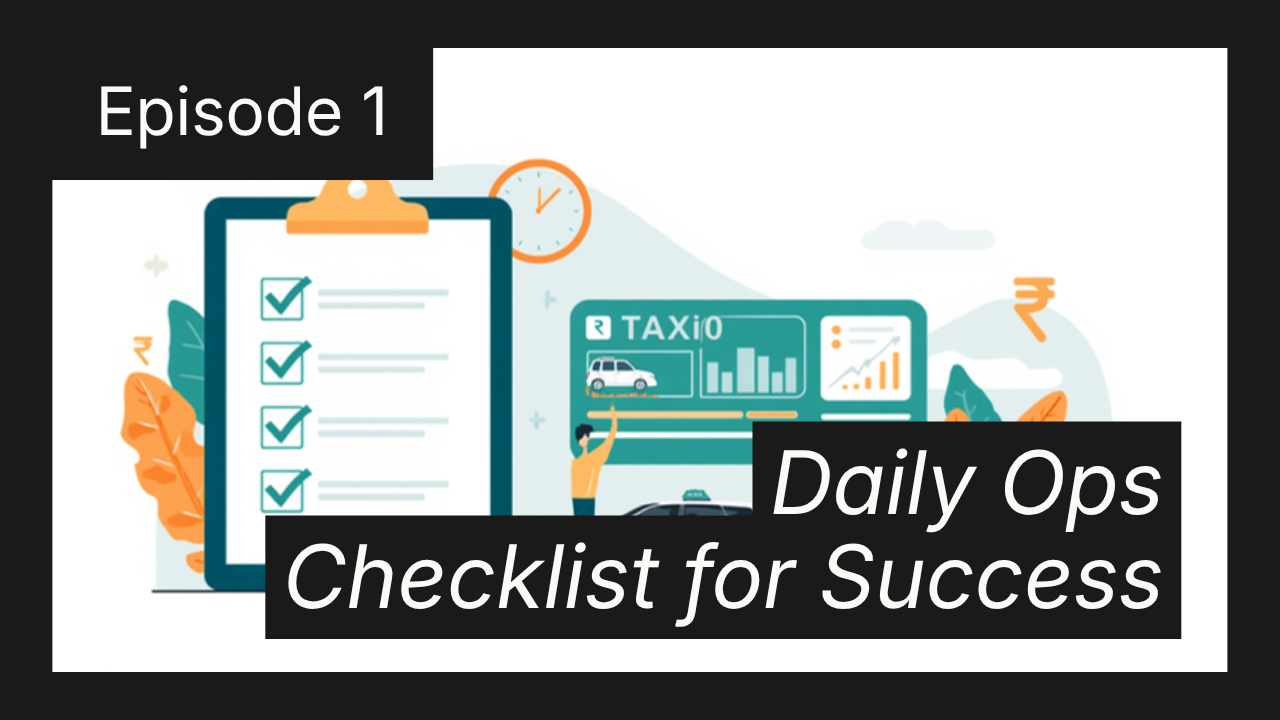
Fleet Operations Best Practices: The Daily Checklist That Actually Gets Followed
Most fleets do not fail on big decisions. They fail on small ones, repeated daily.
A car that nobody dispatched. A driver who never confirmed. A return that came in late and blocked the morning duty. None of these are disasters on their own. Stacked over a month, they are.
This is where fleet operations best practices matter. Not theory. A simple daily routine your team runs whether you are in the office or not.
Here is the checklist that actually survives a real working day.
Start the Day Before, Not at 07:00
The morning rush is lost the night before.
By 21:00 the next day's duties should already be locked. Every confirmed booking matched to a car and a driver. Every driver told where to report and at what time.
Picture Rajesh, who runs a 28-car fleet in Andheri. For two years he allotted cars at 06:30 every morning, half asleep, on WhatsApp. One missed message and a BKC corporate pickup at 08:00 hrs simply did not happen.
If allocation happens in the morning, you are already behind.
A driver gets a clear message the night before: car number, pickup point, client name, reporting time. No "Sir, kal ki duty kya hai?" call at 06:00.
The Morning Check: Five Things Before 07:30
Keep it short or nobody does it.
- Every car for today has a driver assigned and confirmed.
- Every driver has acknowledged the duty (a reply, not silence).
- Any car in the garage is flagged, so you do not promise it.
- Documents expiring this week are noted (RC, insurance, permit, PUC, fitness).
- Yesterday's late returns are checked against today's first duty.
That is it. Five lines. A checklist with twenty items gets ignored by line eight.
Track Returns, Not Just Departures
Most operators watch cars go out. Almost nobody watches them come back.
A Crysta that was due back at 22:00 but rolls in at 01:30 is not just a tired driver. It is a 06:00 airport run now at risk, a possible extra-hour charge you forgot to bill, and a car that skipped its wash.
Late returns are a silent tax on the next day. Track every return time and the reason for the delay. Patterns show up fast. One driver, one route, one client who always over-runs.
Make Idle Cars Visible Every Single Day
A car that does nothing today still costs you. EMI, insurance, parking, the driver's retainer.
Say one car sits idle just 6 days a month. At a modest ₹2,500 of missed margin per working day, that is ₹15,000 a month. Across a 25-car fleet where this quietly happens to four or five cars, you are looking at ₹60,000 to ₹75,000 a month. Push that over a year and it crosses ₹8,00,000. That is one new car you did not buy because the old ones sat parked.
Good vehicle utilisation is not luck. It is someone looking at a "which cars earned nothing today" list every evening and asking why.
How Car Rental Software Improves Daily Efficiency
A checklist on paper depends on memory and honesty. Software just removes the gaps.
This is where a tool like FleetUp fits, quietly. It connects bookings, vehicles, drivers, expenses and billing in one place. You see real-time availability, so double-booking the 10:00 hrs Innova stops happening. You get per-car, per-client and per-trip profitability, not just revenue. You see loss reporting, so idle cars and late returns are not hidden.
And you can simply ask, "How many airport duties did we do yesterday?" and get an answer, instead of scrolling three WhatsApp groups.
Before: the day lives in your ops manager's head. After: the day lives in a system anyone can read.
Track Vehicle Usage and Maintenance the Same Way
Servicing is part of operations, not separate from it.
Log running kilometres per car. Flag the service due before the breakdown, not after. A Scorpio that dies on the expressway at 23:00 costs you the duty, a refund, and the client's trust. A scheduled service costs you one planned off-day.
Put maintenance on the same daily board as duties. Out of sight is out of money.
Frequently Asked Questions
How can car rental software improve my business efficiency?
It removes the manual gaps where money leaks. Bookings, cars, drivers and billing sit in one place, so you stop double-booking, stop forgetting to bill extra hours, and stop letting cars sit idle. Your team spends less time on WhatsApp and more time on actual duties.
How can I track vehicle usage and maintenance with software?
You log running kilometres and service dates per car, and the system flags what is due before it becomes a breakdown. You also see which cars earn and which sit idle, so usage and upkeep are visible on the same screen instead of in someone's diary.
What does a good daily fleet operations routine look like?
Lock tomorrow's duties tonight, run a five-point morning check before 07:30, track every return time, and review idle cars every evening. Keep it short enough that a tired person still does it at the end of a long day.
Strong fleet operations best practices are boring on purpose. Same checklist, every day, run by anyone. Boring is what keeps your cars earning while the next operator is still firing up WhatsApp.